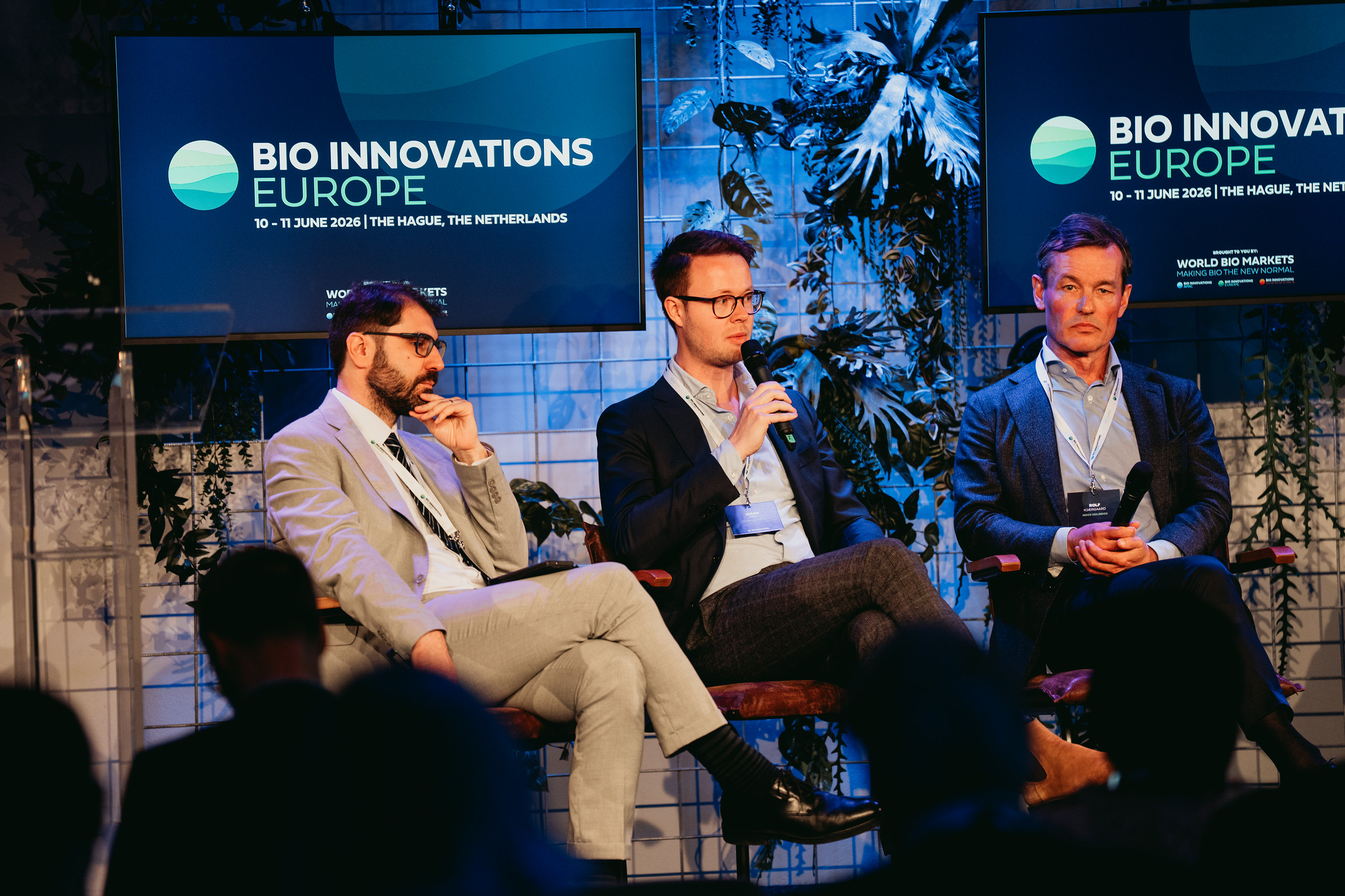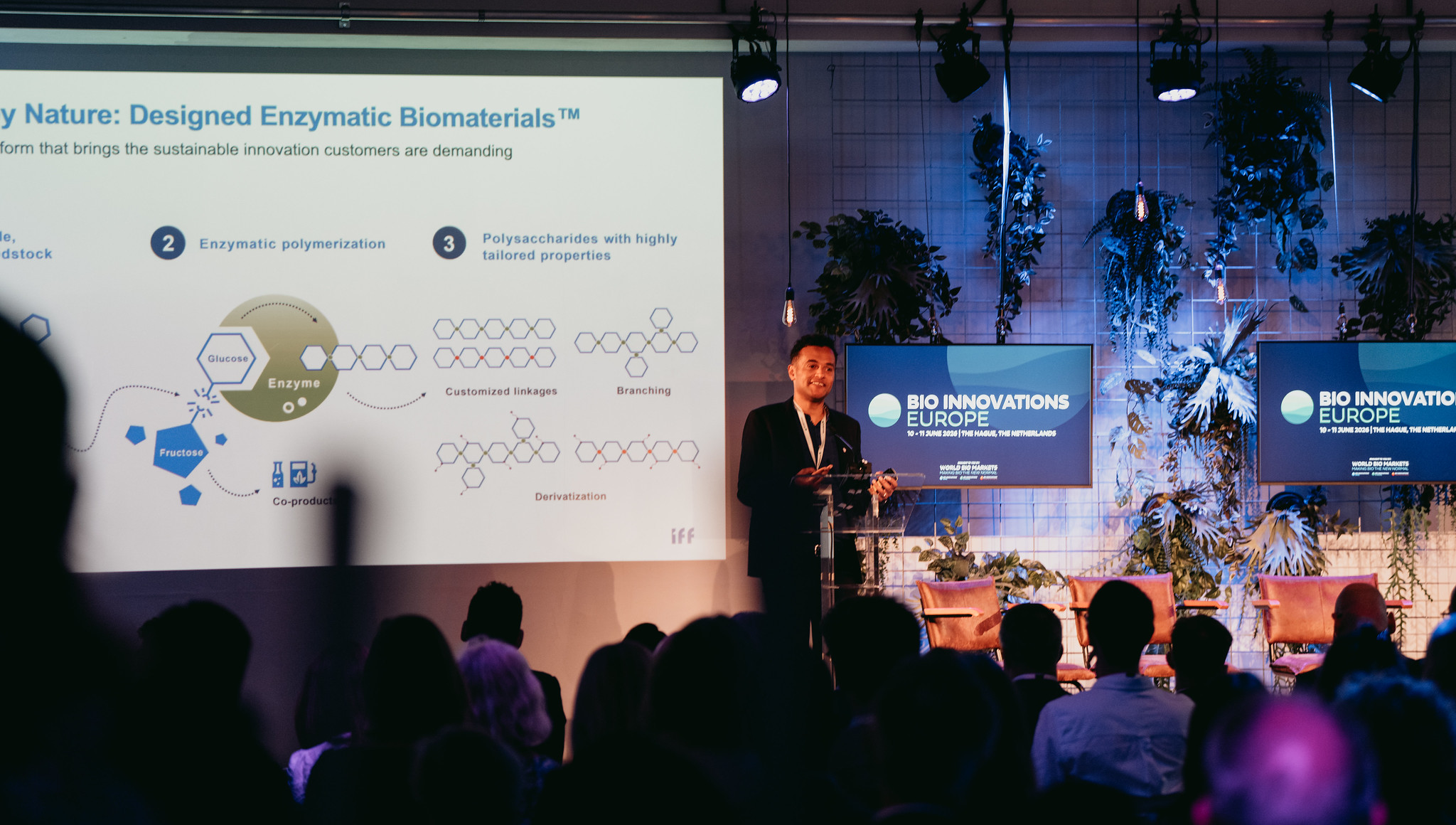
The conference sessions, running parallel to the 1-2-1 meetings program, underpins the event’s core mission of scaling industrial biomanufacturing in the region.
A carefully curated program of company presentations, guest speakers and panels will deliver actionable insights and solutions to critical industry challenges – sparking transformative 1-2-1 commercial discussions.
We’ll be releasing the full 2027 agenda soon so watch this space, but in the meantime below you can find the topics the agenda will cover and, and here is a link to the full agenda from our 2026 edition.
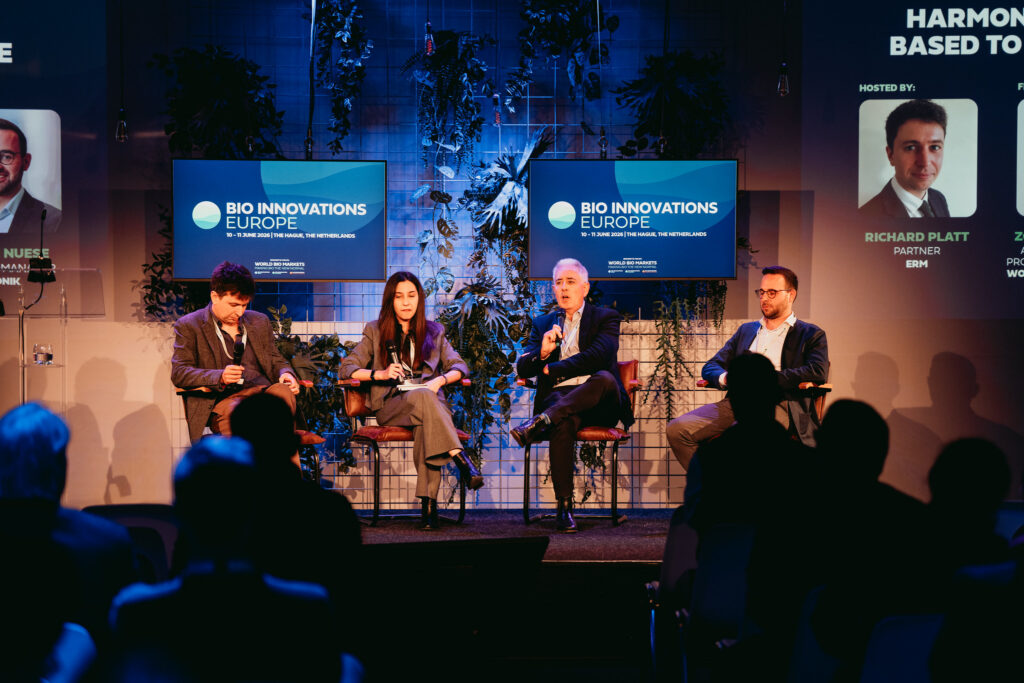
Topics covered will include:
How can bio-based alternatives compete with fossil-based incumbents?
Explore how bio-based chemicals, materials and ingredients can match or outperform petrochemical incumbents on cost, performance and scale. Look at real-world applications already succeeding in packaging, automotive, personal care, coatings and specialty chemicals, and how advances in fermentation, continuous processing and process intensification are closing the gap.
What do European buyers of bio-based chemicals and materials want?
Hear directly from chemical majors, consumer brands and industrial end-users on the practical criteria that drive adoption. Beyond sustainability claims, buyers prioritise consistent quality and performance at scale, supply security, competitive pricing, regulatory readiness and clear carbon accounting. Understand what suppliers must deliver to convert pilots into meaningful commercial contracts.
How can the EU build the right policy, regulatory and incentive frameworks for industrial biomanufacturing?
Join policymakers, industry leaders and investors to explore progress on the EU Bioeconomy Strategy, the Biotech Act (and expected Biotech Act II), the Bio-based Europe Alliance, Critical Chemicals Alliance, green public procurement and bio-based content measures — and how these tools can create stronger demand, attract private capital and accelerate commercial-scale deployment.
Why is scale-up still so challenging in Europe — and where are companies finding success?
Moving from demonstration to commercial production remains a major hurdle due to high capital costs, complex permitting, technology risk and the need for large-scale offtakes. Explore how new policy incentives, public and private financing tools, offtake-backed models and shared open-access infrastructure are helping European companies bridge the “double valley of death.”
How can Europe secure sustainable and competitive feedstocks at scale?
Europe’s agricultural and forestry residues, industrial side-streams, food-processing waste, secondary biomass and emerging sources such as captured CO₂ offer real potential, yet availability, cost, certification and logistics remain constraints. Explore practical routes to reliable, circular feedstock supply chains that support competitive biomanufacturing without conflicting with food or biodiversity goals.
How can we bridge the funding gap for Europe’s next-generation biorefineries and biomanufacturing plants?
Commercial-scale projects still face high upfront costs, technology risk and long payback periods. Discuss the evolving mix of public instruments (CBE JU, European Competitiveness Fund, national schemes, EIB), private capital, offtake-backed financing and blended models that are helping de-risk the journey from demonstration to industrial deployment.
How will AI and digital tools accelerate European biomanufacturing scale-up?
AI is moving from research into industrial impact — strain design, process optimisation, real-time monitoring and quality control. Learn how European companies are using AI and advanced data systems to raise yields, cut costs, shorten scale-up timelines and strengthen competitiveness.
How are geopolitics, trade and strategic autonomy reshaping industrial biomanufacturing in Europe?
Supply-chain vulnerabilities, energy-price volatility and global competition have elevated biomanufacturing as a strategic priority. Explore how Europe can build resilient regional value chains, retain industrial capacity and IP, and stay competitive while advancing the goals of the Clean Industrial Deal and the EU’s open strategic autonomy ambitions.